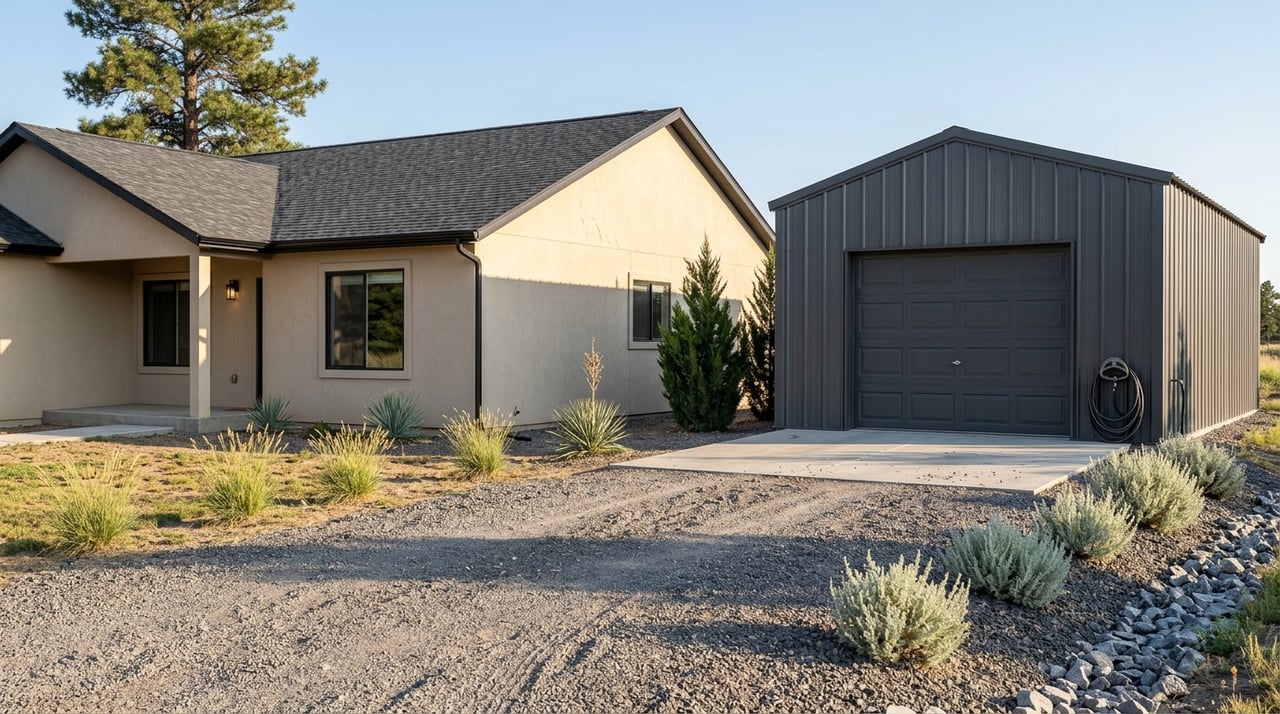
How to Prepare Your Elbert County Home for Sale
July 2, 2026
July 2, 2026
Selling an acreage home in Elbert County is different from listing a home on a typical suburban lot. Buyers are not just looking at your kitchen, paint colors, or floor plan. They are also sizing up the land, driveway, outbuildings, access, and how well the whole property appears to function and hold up over time. If you want to make a strong first impression and avoid preventable surprises, a focused prep plan matters. Let’s dive in.
In Elbert County, buyers often evaluate the property as a complete package. That includes the home itself, usable land, road and driveway access, fencing, barns or shops, and visible maintenance across the parcel.
That broader view matters even more in a rural setting where wildfire conditions, vegetation, and topography can affect how a property is perceived. Elbert County specifically notes that wildfire risk is shaped by local conditions, and Colorado State Forest Service guidance treats the home and surrounding land together through the home ignition zone.
On top of that, acreage properties often involve more county rules, more systems, and more documentation than a smaller in-town property. That is why the smartest pre-listing strategy usually focuses on three things: presentation, legal clarity, and buyer confidence.
For many acreage properties, the showing starts before a buyer reaches the front door. The access road, entry point, and driveway shape that first impression right away.
Elbert County driveway standards recommend a 20-foot minimum width for the full driveway length, require at least a 14-foot all-weather driving surface, and require 13 feet 6 inches of unobstructed vertical clearance. The county also encourages a 16-foot surface for larger fire apparatus.
That does not mean you need a major construction project before listing. It does mean you should trim branches, remove brush encroaching on the drive, and make sure the route is clear, visible, and passable for buyers and service providers.
A rough or poorly defined entrance can make the property feel harder to use than it really is. If ditches are clogged or culverts are blocked, buyers may notice standing water, erosion, or general neglect.
Before the home goes live, walk the full approach and correct what you reasonably can. If any work would affect the public right-of-way, remember that Elbert County says an access permit is required for that type of work.
Acreage properties often sit farther from the road, so clear identification matters. Colorado State Forest Service guidance recommends a visible, noncombustible house-number sign at the end of the driveway.
This small update helps with showings and supports emergency access. It also signals that the property has been maintained with practical rural needs in mind.
On an acreage property, mowing near the house is only part of the job. Elbert County requires noxious weeds to be controlled, contained, and eradicated by law, and places responsibility on the landowner.
That means buyers may read unmanaged weeds as more than a cosmetic issue. They can see it as a sign that the land has not been consistently cared for.
Start with the spaces that shape usability and first impressions. These often include:
Colorado State University Extension recommends an integrated approach to weed management on small rural acreage, including prevention, mowing, mechanical control, revegetation, and careful herbicide use where appropriate.
Your goal is not to make rural land look artificial. Your goal is to make it look managed, understandable, and ready for the next owner.
When buyers can clearly see open areas, boundaries, and access routes, the property tends to feel more usable. That can make a meaningful difference in how they view the value of the land.
In Elbert County, wildfire readiness is a major part of acreage presentation. Buyers are often paying attention to tree spacing, grass height, roof debris, and how close combustible materials sit to the home.
Colorado State Forest Service guidance recommends cleaning leaves and needles from roofs and gutters, mowing grass and weeds to 4 inches or less in the immediate defensible space, and moving slash, wood piles, and flammable debris away from structures.
The area closest to the house deserves special attention. CSFS guidance also recommends screening vents with 1/8-inch metal mesh, maintaining 6 inches of vertical clearance between the ground and siding, and replacing combustible fencing or gates within 5 feet of the home.
You do not need to present your property as perfect. You do want buyers to feel that the property has been cared for with local conditions in mind.
Elbert County encourages residents to prepare for sheltering in place or evacuating people, pets, and livestock. That makes wildfire prep part of the overall story of how the property functions.
As you prepare to sell, look at the property through that lens. Clean rooflines, trimmed limbs, separated propane tanks and firewood, and uncluttered outdoor areas can help buyers feel more comfortable.
Barns, shops, sheds, and detached garages should not feel like mystery spaces. Colorado seller disclosure forms specifically include additional-structure supplements for barns, detached garages, and similar structures.
That means these buildings are not just background features. Buyers and their agents are likely to look at condition, function, moisture issues, roof condition, electrical items, and other practical details.
Before listing, remove broken items, old materials, and general clutter. Sweep floors, organize tools and supplies, and create enough open space that a buyer can understand the building’s intended use.
If a structure serves as a workshop, tack room, garage, or storage barn, stage it so that purpose is obvious. A clean outbuilding tends to read as useful square footage, while a crowded one can read as a problem.
If your property includes corrals, pastures, or livestock areas, presentation still matters. Clean up junk piles, improve the look of gate areas, and make pasture boundaries easier to follow.
For buyers considering animals, clear layout and access are part of the value. Even for buyers who do not plan to use the property the same way, an organized setup helps the land feel intentional.
Acreage properties often have extra improvements added over time. That may include barns, sheds, detached garages, converted spaces, or expanded utility areas.
Elbert County says most new construction, remodels, and repairs in unincorporated areas require a building permit. The county also notes that converting a barn or storage building to a residence requires approval, and an illegal dwelling unit is one built or occupied without the needed land-use approvals or proper building permit.
If you are unsure whether a structure was properly permitted, it is much better to look into it before listing. Buyers may uncover those questions during inspections or due diligence anyway.
A pre-listing review can help you avoid delays, renegotiation, or lost confidence once the home is under contract. It also supports cleaner disclosures from the start.
Rural buyers often expect more documentation, and for good reason. Colorado residential disclosure forms ask detailed questions about wells and septic systems, including well permits, drilling records, shared well status, septic permit dates, inspection dates, and pumping history.
If your home is served by a well, Colorado’s Division of Water Resources says the well-permit file may contain allowable uses, the original permit application, and available construction and pump installation records.
Elbert County Public Health notes that statewide OWTS regulations were updated effective June 15, 2025, and local Elbert County regulation changes were implemented June 15, 2026. That makes septic documentation especially important in current transactions.
Do not wait until a buyer asks for paperwork. Gather your permit, maintenance records, pumping history, and any recent inspection details before the listing goes live.
In addition to well and septic documents, it helps to gather:
A complete packet can reduce uncertainty and show buyers that the property has been responsibly maintained.
Colorado brokers are required to disclose adverse material facts actually known to them, including title issues, physical defects, and environmental hazards required by law to be disclosed. Acreage properties can involve a wider range of conditions than a standard subdivision home.
Colorado seller disclosure forms ask about issues such as drainage, flooding, grading, tanks, transmission lines, floodplain or wetland status, zoning issues, code violations, and additions made without permits.
A strong pre-listing process gives you time to answer disclosure questions more completely. That can help reduce last-minute scrambling and make the transaction smoother once a buyer is in the picture.
If you know a condition exists, bringing documents together early is often the best way to support a clear and confident sale.
Even on acreage, buyers still care about how the home feels inside. The 2025 Profile of Home Staging found that 29% of agents said staging led to a 1% to 10% increase in the dollar value offered, and 49% said staging reduced time on market.
The same report found that 83% of buyers’ agents said staging made it easier for buyers to picture the property as their future home. That supports the basics: declutter, deep clean, and create simple, welcoming rooms.
On an acreage listing, interior staging works best when it is matched by exterior and land preparation. A spotless kitchen will not carry the full showing if the driveway is overgrown or the barn is packed wall to wall.
The strongest presentation usually combines home staging with practical rural prep. Buyers should be able to understand both the lifestyle and the function of the property.
Photos, video, and virtual tours matter even more when the property includes land and outbuildings. Buyers need help understanding driveway length, building placement, open space, and how the parcel is laid out.
That usually means the best marketing package shows more than the interior. Wide exterior views, clear shots of additional structures, and images that explain the relationship between the home and land can help buyers make sense of the property before they visit.
If you want a practical place to start, focus on these steps:
Preparing an Elbert County acreage home for market takes more than standard curb appeal. The good news is that the extra work often pays off in stronger buyer confidence, smoother due diligence, and a listing that tells a clear, well-managed story from the road all the way to the back fence.
If you are getting ready to sell and want a practical plan for what to do first, Galen Becker can help you build a smart prep strategy for your property, your timeline, and your goals.
Stay up to date on the latest real estate trends.
Whether buying, selling, or investing, Galen Becker provides tailored strategies and expert support to achieve your real estate goals.