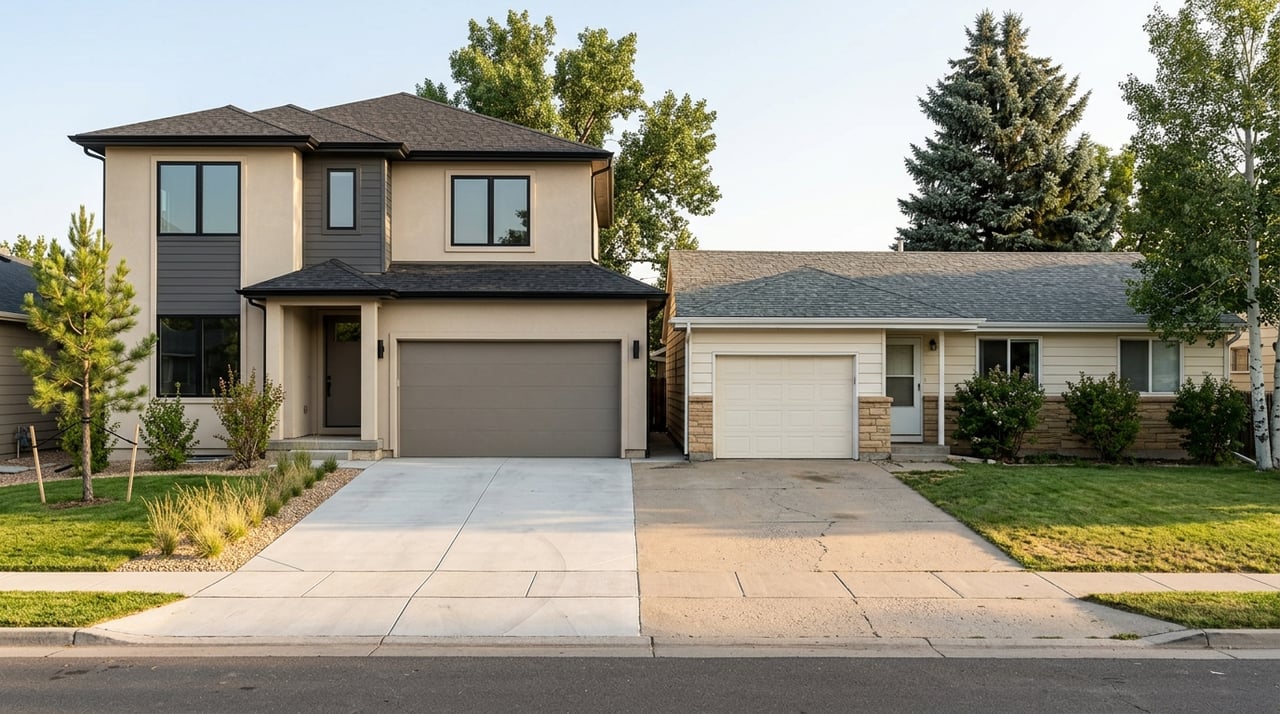
New Construction vs Resale Homes in Douglas County
May 28, 2026
May 28, 2026
Trying to choose between a brand-new home and a resale in Douglas County? It is a common question, especially in a market where both options can sit at the higher end of Front Range pricing. If you are weighing timeline, budget, customization, and long-term upkeep, the right answer depends on how you want to live and how soon you need to move. Let’s dive in.
Douglas County is not a market where new construction pops up evenly in every area. The county’s long-range planning and local municipal review processes in places like Castle Rock and Parker mean most new development is concentrated in specific planned communities and active growth areas.
That matters because your decision is not just new versus old. In Douglas County, it is often a choice between a home in a newer planned community and a resale home in a more established setting. Those two paths can feel very different day to day.
Recent market snapshots also show why this decision deserves careful thought. Redfin reported a median sale price of $700,000 in March 2026, while Realtor.com reported a county median sale price of $750,000, with about 2,900 homes for sale and a median 33 days on market. In other words, both new construction and resale homes can represent a major investment here.
New construction in Douglas County covers a wide range of home types and price points. Some communities offer production homes with set floor plans and a menu of finishes, while others offer semi-custom or custom opportunities with more design input.
Current examples help show that range. Macanta in Castle Rock advertises new homes from the $700s, while Montaine starts around $769,995 and shows quick move-ins roughly from $1.05 million to $1.3 million. Toll Brothers at Crystal Valley starts at $951,995 and highlights flexible floor plans and finish options, while Pradera in the Parker and Castle Rock corridor offers semi-custom and custom homes.
That spread is important because new construction is not one-size-fits-all. Some buyers picture fully custom design when they hear “new build,” but many Douglas County options are production homes with more limited personalization.
New homes appeal to many buyers because they typically offer modern layouts, newer materials, and less immediate repair work. You may also have some ability to choose finishes, floor plans, or structural options, depending on the builder and stage of construction.
For buyers who want a more current look and feel, that can be a big plus. Open kitchens, newer systems, and energy-conscious features are often part of the appeal, even when customization is limited.
Because of local planning and permit processes, new construction tends to cluster in identifiable areas rather than being available in every neighborhood. Official planning and permit activity point to active pockets in Castle Rock, Parker, Sterling Ranch, Highlands Ranch, and several metro districts.
That means your location choices may feel narrower if you are set on a new home. You may need to decide whether the benefits of a newer property outweigh being limited to certain communities or development patterns.
Resale homes usually offer the widest location range in Douglas County. They can be found across established neighborhoods, mature subdivisions, and areas where the landscaping, streetscape, and surrounding homes are already built out.
For many buyers, that established feel matters. Existing homes often come with mature landscaping and a more predictable sense of what the area looks and feels like today, not what it may look like after future phases are completed.
Resale also gives you a broader mix of age, style, lot size, and layout. If you want more choices across the county, resale inventory often gives you more flexibility.
The biggest practical advantage is speed. Consumer guidance cited in the research shows an existing home often closes in about 30 to 60 days after contract, while a new build can take roughly 7 to 14 months, sometimes longer depending on weather, permitting, supply constraints, and customization.
If you are relocating, coordinating a lease ending, or trying to line up a sale and purchase, that shorter timeline can be a major benefit. Resale homes can also make it easier to compare actual condition, yard size, street setting, and nearby surroundings before you commit.
The tradeoff is that older homes may need repairs, cosmetic updates, or larger renovations after closing. Even if a home looks move-in ready, it is smart to think about possible near-term expenses like paint, flooring, appliances, roofing, or system updates.
Colorado home-buying guidance recommends a home inspection to identify major defects and potentially expensive repairs before closing. That is one reason resale buyers should build room into both their budget and expectations.
If your move date is firm, resale usually has the edge. In most cases, an existing home offers a more predictable closing path than a home still being built.
That does not mean all new construction takes a year or more from the day you start looking. Some builders offer quick move-in homes that are already under construction or nearly complete. Still, if the home is not finished, your timeline may depend on construction progress, permitting, weather, and material availability.
If you need to move quickly, resale is often the safer choice. It gives you a clearer path to possession and fewer unknowns around completion dates.
That can be especially important for out-of-state buyers, military households, or anyone trying to avoid temporary housing. A shorter and more predictable schedule reduces a lot of stress.
Customization is one of the biggest reasons buyers look at new construction, but the level of control can vary widely. A production builder may let you choose from a set group of floor plans, elevations, and finish packages, while semi-custom and custom builders may allow much more input.
In Douglas County, you can see that spectrum clearly. A planned community with production homes offers a very different experience from a semi-custom or custom setting like Pradera.
Here is a simple way to think about it:
If you want a modern home but do not need every finish to be your personal selection, a production home may work well. If design control is a top priority, you may need more time and a larger budget.
Cost is rarely as simple as the sticker price. New construction can come with added expenses tied to land, labor, permits, materials, and upgrade selections. Resale homes may have a lower or more flexible upfront path in some cases, but they can bring repair or renovation costs after closing.
In Douglas County, where county-level median sale prices have recently been reported around $700,000 to $750,000, either path can require careful budgeting. The question is often less about which option is “cheaper” and more about when you want to spend the money.
New construction often makes sense if you want fewer immediate repair projects and are comfortable paying for newer finishes or builder upgrades upfront. Resale often makes sense if you want faster possession, mature surroundings, and the ability to improve the home over time.
Neither path is automatically better. The right choice depends on your cash flow, tolerance for projects, and how important turnkey condition is to you.
Many buyers assume a new home means fewer things to worry about, but due diligence still matters. Colorado law treats a builder’s warranty separately from a home warranty service contract, and a lender cannot require you to buy a home warranty service contract.
If a home warranty service contract is involved, Colorado law requires details such as exclusions, limitations, repair procedures, time frames, duration, and transferability to be spelled out. That means you should read the fine print carefully and make sure you understand what is covered and what is not.
Resale buyers should absolutely plan for inspections, but new-build buyers should not skip careful review either. Colorado guidance recommends a home inspection, and consumer guidance also supports making offers and contracts contingent on financing and a satisfactory inspection.
For a resale home, inspections help uncover defects and repair needs before closing. For a new home, the focus may be more on understanding workmanship, systems, completion items, and warranty coverage.
Many newer Douglas County communities are part of HOAs. State guidance reminds buyers to review HOA documents, insurance, dues, landscaping obligations, and any special assessments before closing.
That is especially important in planned communities, where neighborhood rules and fees may be part of the ownership experience. You want to know those details before you commit, not after move-in.
For many Douglas County buyers, the choice comes down to three things: move date, design priorities, and budget flexibility. Once you are honest about those three, the answer usually gets much clearer.
A resale home may be the better fit if you want a faster closing, more established surroundings, and a wider range of locations. A production new build may be the better fit if you want a modern layout and lower near-term repair risk. A semi-custom or custom home may fit best if you have more time, a higher budget, and strong preferences around design.
If you are stuck, ask yourself these questions:
Your answers will usually point you in the right direction.
If you want help comparing specific communities, builder options, and resale opportunities in Douglas County, Galen Becker can help you sort through the tradeoffs and build a plan that fits your timeline and goals.
Stay up to date on the latest real estate trends.
Whether buying, selling, or investing, Galen Becker provides tailored strategies and expert support to achieve your real estate goals.